Winter Storage Part II

dried stores 11 Winter Storage Part II

This is part of our dried storage area. We like to have a large section of organic dried fruits, mushrooms, spices and other organic bulk items. We buy in bulk to save on costs.

dried stores 2 Winter Storage Part II

We like having a large section of organic beans, legumes, and whole grains. We grind our own flour at home.

Our household has three types of winter storage. We use a root cellar, dry storage and freezers. The root cellar is humid and cool, which is good for storing: potatoes, carrots, parsnips, rutabagas, cabbages, onions, garlic, shallots, green tomatoes, raw cheese and crocks of fermented vegetables. The dry storage is dry and cool, which is good for storing: dried fruits, ground coconut, grains, beans, legumes, assorted herbs and raw honey. We have over 70 cubic feet of freezer space in which we store: beef, pork, lamb, chicken, turkey, organ meats, bones, raw milk, raw butter, butter, nuts, seeds, berries, tomatoes and assorted vegetables.

milk nuts freezer Winter Storage Part II

This freezer used to be full of raw milk. We will run out of milk before Olivia gives birth to her next calf. Normally, I would never store anything with frozen milk to avoid off flavors getting into the milk but I ran out of space in my other freezers.

fruit freezer Winter Storage Part II

This is my fruit freezer. It was full at the beginning of winter. I now have space for nuts. When nuts are shelled it is better to store them in the freezer to protect their delicate oils.

fruit meat freezer Winter Storage Part II

This freezer would normally be empty by this time of year. One of our big freezer's compressor failed. We where lucky that we didn't lose any food. It is a good idea to have a temperature alarm on all freezers to avoid this kind of problem.

Three years ago, we came to Kamloops and moved into an old mining pit. The soil is clay, rock and gravel. The first year we were busy building the warehouse and a home. The second season we started the garden. We had to bring in compost, peat, and manure from all over the city to grow anything. We planted fruit trees, currents, raspberries and other food producing plants. We use drip irrigation and a small number of spray emitters. The soil was so hard and rocky I was using a rock pick to dig shallow holes to plant my herb garden. Many plants died that first year.

The quickest way to build soil is animals. We have run chickens for two seasons now. Shaen is the gardener in the family and he has had some production this year. We have had good production from: raspberries, strawberries, some tree fruits, spaghetti squash, beets, zucchini, chard, tomatoes, green beans, herbs and dried beans. Everything else languished or died.

The last week, has been a race with the weather to remove the remainder of our crops from the garden. We managed to put away some spaghetti squash, pie pumpkins and green tomatoes in the root cellar. We froze some raspberries and green beans. We put away a very small amount of dried beans into our dry storage. It was chickens that really worked this year. We put away 120 chicken or about 600 pounds of meat in our freezers. We have eleven turkeys still growing in the back “pasture”. Our new laying hens are consistently producing over a dozen eggs a day.

Every urban homestead starts from humble intentions. The urban homesteader must be flexible. The land can only produce what the land can produce. The urban homesteader must be patient. With careful tending and a little effort, the land will produce more and more each year. If we are in a hurry, production can be increased, but a cost will be paid in labor or money. The urban homesteader needs to be grateful. Whatever comes is a bounty, a gift, from the land. In our modern world we have forgotten how precious food is. Growing your own food counteracts this delusion.

These are some of the local producers I have used for dry stores and for our freezers:
1. Westsyde Apiaries: 250.579.8518: raw honey, raw honey comb
2. Fieldstone Granary Ltd: 250.546.4558: organic spelt kernels, golden flax seed, oat groats, green lentils, and buckwheat groats, chicken scratch
3. Healthylife Nutrition: 250.828.6680: raw pecans, raw walnuts, shredded coconut, raisins, currents, dates (Once a year fall order from www.ranchovignola.com.)
4. Jocko Creek Ranch: 250.374.9495: grass fed beef, grass fed lamb
5. Lyne Farm: 250.578.8266: grass fed beef, grass fed veal
6. Beaver Valley Livestock Services: 250.243.2257: pastured pork
7. Big Bear Ranch: 250.620.3353: pastured organic pork
8. Golden Ears Farm: 250.679.8421: unsprayed strawberries
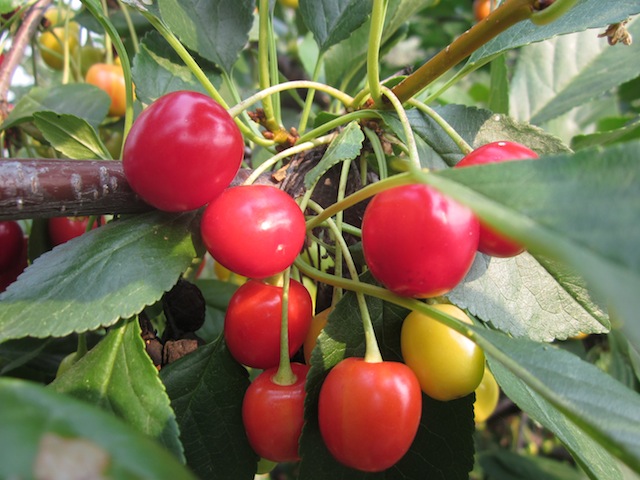
9. Highland Farm: 250.803.0048: organic cherries
10. Blueberry Hill Farm: 250.246.4099: unsprayed blueberries
11. Avalon Dairies: 604.456.0550: pasteurized organic butter (Good for cooking.)

Winter Storage Part I

kimchi crock Winter Storage Part I

Opening the last crock in the spring is always an adventure. I am sometimes horrified by what I find on the top layer. But below is always beautiful kimchi with a complex, rich flavor. If at all possible, eat a small amount of fermented food with every meal.

This week my family have been working on a modified root cellar for winter storage. Traditionally, a root cellar would be built into the ground. This would give the vegetables a consistent temperature and humidity throughout the seasons. We will try to build a real root cellar next spring.

This winter we will have to be satisfied with a modified work shed. The work shed is a typical 8′x12′ wood-frame constructed building. The building will be too dry. We will have to put pails of water in the building to increase humidity. We will have to heat the structure during the coldest parts of the winter, something a true root cellar would not require.

We will be sourcing vegetables for storage over the next few weeks. We will be looking for potatoes, onions, carrots, beets, cabbage, assorted types of squash, garlic, hot peppers, parsnips, rutabaga, turnips and shallots. As I said before, I am not a local food zealot. But I like to buy as much as I can locally. My largest household expense is food. When I purchase my food locally, my money stays in our community. Also, the quality is better. It is great to be able to look at my plate and know where everything on it came from. It makes me feel somehow more connected.

I am madly making sour kraut and kimchi. I am always amazed at how many cabbages can go into a crock. These crocks will be stored in the root cellar for later consumption.

There are lots of great places to find local food for root cellar winter storage. These are some of the producers I have used this year:
1. Zaparango Organic Farm (certified organic)
Robert Vanderlip T: 250.318.0235
potatoes, carrots, onions, assorted squash, livestock feed corn
2. Lyne Farm (un-sprayed)
Liz Lyne T:250.578.8266
pickling cucumbers, beets, carrots
3. Farmhouse Herbs (certified organic)
Paula and Mendel Rubinsons T: 250.373.2312
pickling cabbage, onions, shallots, parsnips
4. Gort’s Gouda Cheese Farm (certified organic)
T: 250.832.4274
raw gouda, smoked raw gouda (Have Gort’s cut the large wheels into eight segments and vacuum pack. Each piece will naturally age and easily last through the winter months.)
5. Highland Farm (certified organic)
T: 250.803.0048
garlic, cherries, apples

Undated May 13, 2012: Last winter we finished the root cellar. It is forty feet long and three feet wide. There is another ten feet of covered space on the outside of the root cellar for storage of garden equipment. Here are some pictures taken as I clean out the root cellar today. It will give you an idea of what to expect if you store high quality produce.

root cellar Winter Storage Part I

This is our new root cellar. The south wall is a retaining wall of concrete block and the floor is gravel. The north wall is the back of the warehouse. The covered outside area is great for storing garden equipment.

cellar beets parnips carrots Winter Storage Part I

These yellow beets, parsnips and carrots were purchased last September from Farmhouse Herbs. I should have opened the bag of carrots to let out extra moisture. The vegetables are still edible after over seven months of storage.

cellar garlic potatoes Winter Storage Part I

This is the last of the garlic and potatoes. I ran out of onions last week. After over seven months of storage the garlic is still very good. The potatoes need to be peeled but are still edible.

cellar beet carrot puree Winter Storage Part I

This root cellar puree was made with yellow beets, carrots, sea salt, butter and raw milk. I added some fresh chives from my herb garden. It can be eaten like mashed potatoes or fry up in lard or butter for breakfast.

Grassfed Veal

Confinement veal has a bad reputation. Standard veal production requires the calf to be separated from the mother after birth. The calf is confined in a pen just big enough for the calf to stand or lay down. The calf is fed only milk or a milk substitute for 18 weeks and then slaughtered. This feeding schedule brings on anemia in the calf which produces the characteristic white meat of veal. The meat has a very mild favor and is known for tenderness that can be cut with a fork. These calves are prone to illness and must be medicated to survive.

Grassfed veal is different. The grassfed veal calf stays with its mother on pasture. The calf has access to the mother’s milk and grass. The calf is butchered at 6 to 9 months old, giving a pink meat with more flavor, though it is not as tender as confinement, milk-fed veal. The calves are very healthy and rarely need medical attention. The calves have a better life, even if it is short. You will not be able to find grassfed veal without a serious search and you will pay top dollar for this premium product. Most grassfed veal is purchased by chefs in high end restaurants looking for more flavor from this old favorite. If you are interested in this specialty food please read The New York Times article called: Veal to Love – Without the Guilt.

Traditionally, grassfed veal was a side product of the dairy industry. The male calves would become veal and the females, unless culled, would become part of the milking herd. Traditionally, the offal from the veal calf is greatly prized. The stomach of the young calf is used to produce rennet required for cheese production. I had a chance to try this premium product when Patty’s calf went to slaughter. (Patty is our milking Jersey cow.) The grassfed veal was the best beef I have ever tasted. It was truly delicious. If anyone knows a rancher in the Kamloops area producing this product, I would like to know. Please email me and I will update this posting with the information.

Updated October 2, 2009: I have just talked to Susan McGillivray at Jocko Creek Ranch. They have grassfed veal for sale. These animals normally go to the feedlot for grain fattening over the winter. The steers are worth more that the heifers because the steers will fatten-up better in the feedlot. This product is seasonal and must be bought in October or November before they go to the feedlot. You purchase by the animal. The calves will weight about 500-600 pounds and you will have to pay for slaughtering. Right now the cost is $1.00/pound for heifers and $1.12/pound for steers. This is a live weight price. I would buy the heifers because they are cheaper and it doesn’t matter how well they do in the feedlot. If you are interested in getting this wonderful meat please call Jason or Susan McGillivray at 250.374.9495.

Updated June 23, 2010: Grassfed veal may be wonderful but I have found something even better. Last year we bought half, of an eight-year-old spent Dexter Jersey Cross milking cow. A cow is considered “spent” when she is getting old and does not conceive. When this happens it is time to replace the cow. This cow spent her life on green pasture with a small amount of dairy ration during milking season. The butcher wanted to grind her up into hamburger, which would have been standard procedure for a cow of her age. Since the cow was over thirty months old, by regulation, no part of the spinal column can be consumed. We had the butcher cut her up into roasts, steaks, stewing meat and hamburger.

That eight-year-old cow has been the best meat we have ever tasted. I think back in horror that she might have been ground up into hamburger. The meat had a tender, beefy, full flavor with marbled fat throughout. Part of the reason the meat was so delicious was the cow was part Dexter, a breed known for its wonderful meat. We would even lightly barbecue the stewing meat. It was tender and juicy. Can you believe that! Unfortunately, this meat will be impossible to get from the Industrial Food System. The only way to get this meat is buying an animal directly from the rancher or dairy farmer.

So, Harold McGee was right: “Full-flavored meat comes from animals that have led a full life… Life intensifies flavor, and modern meat animals are living less and less.” He believed cattle reached their peak of flavor around four years of age, but this was before the time of Mad Cow Disease. What Harold McGee fails to mention when he says “modern meat animals are living less and less” is that, you could not find a confinement animal from the Industrial Food System that was eight years old. If you did, it would be so diseased and sickly, no one in their right mind would eat it’s flesh. I sometimes wonder if the whole thirty month rule has more to do with the general poor health of confinement animals, rather than avoiding Mad Cow Disease. For more information about Mad Cow Disease please read Visit to the Killing Floor at Kam Lake View Meats and read the series of essays by Mark Purdey.

If you are looking for a small family cow that is good for milk and meat, please see the Canadian Dexter Cattle Association.

Absinthe Tasting in Vernon, BC on August 13, 2009

Screen shot 2012 02 07 at 6.01.48 PM 201x300 Absinthe Tasting in Vernon, BC on August 13, 2009

Taboo Absinthe is my favorite hard liquor.

Absinthe is a distilled spirit with an anise flavor made with Artemisia absinthium, better known as wormwood. The Green Fairy was enjoyed by many famous Bohemian artists and writers. It was thought to have an addictive psychoactive drug-like quality to the drink. It was outlawed in Canada, the United States and most countries in Europe.

I first drank Absinthe in Spain when I was 13 years old. My Mother took the summer off from her studies and took her daughters on a grand tour of Europe. At the time, Spain was one of the few countries still allowing the drinking of Absinthe. I still remember the rich anise flavor of the drink consumed in an ancient tasting room. Of course, being 13 and drinking isn’t a worry for Europeans.

It was nearly thirty years before my next taste of Absinthe. I was visiting the liquor store to find brandy for cooking pate and I saw a bottle of Absinthe. At first I thought it mustn’t be the real thing. After talking to the resident liquor specialists, I found out that the prohibition of Absinthe was finally over. In fact, there was a distiller called Okanagan Spirits in Vernon, BC making Absinthe. I bought a bottle of Taboo Absinthe.

My sister and I sat down and had a drink. She had hers straight up. I cooled mine on ice until the drink became cloudy. The Absinthe was wonderful. I understand why it won a silver metal in Europe. It is a world class drink.

If you would like to try some Absinthe and learn more about the drink’s history, there will be a tasting in Vernon, BC on August 13, 2009.

Updated April 21, 2010: Okanagan Spirits has done it again. They entered eleven products in the World Spirit Competition in Klagenfurt, Austria. They won five Gold and six Silver medals and are now recognized as a Master Class Distillery. Okanagan Spirits has introduced a new Sour Cherry and Wild Huckleberry liqueur, both won Gold in the competition:
The Cherry liqueur is made with locally sourced sour cherries and if current sales continue, it could become our most popular liqueur. Not sickly sweet like many liqueurs but with a true emphasis on the Sour Cherry taste. Its fantastic. Delicious Wild Huckleberries sourced from Grand Forks British Columbia, are used to make this liqueur. With so much fruit required for a small return in liqueur, you will need to act fast to secure yourself a bottle of this award winner.

U-Picking Strawberries, Cherries and Blueberries for Winter

pitting cherries U Picking Strawberries, Cherries and Blueberries for Winter

During cherry season we pit and freeze at least 100 pounds of sweet cherries and 50 pounds of sour cherries. These cherries can be enjoyed all winter long in desserts, smoothies and other treats.

Over the last month, we have been working hard to freeze enough soft fruit to last until next year. I try to find certified organic or un-sprayed fruit. I feel comfortable asking the farmers what growing methods they use. Over a number of years, I get to know people and what they do on their farms. This means I can get products that may not be certified organic but are just as good. I feel good knowing where my food comes from and building a long term relationship with my farmers.

I try to find organic or un-sprayed u-pick situations for soft fruit. I do this for a number of reasons. U-pick fruit is cheaper than buying picked fruit. I can get a better quality product. I know the product has been picked that day which is better for freezing. By freezing the fruit I save money even if the price is higher for organic or local fruit. I also know my money stays in my community and doesn’t go to some faceless corporation half way around the world. Of course, I’m bringing my children and I don’t want them to be picking (and eating) in a sprayed field. Nor do I want the farmers to have to get sick from working in sprayed fields to feed me!

I also want my children to know where their food comes from. A child that has picked strawberries knows it comes from a small perennial plant, blueberries from bushes, and cherries from trees. The experience of meeting the farmer and seeing the farm is a priceless experience. I want the children to have some idea of the work involved in picking, preparing and storing food for the winter. Even when they get tired and stop helping, they seem to take it all in by osmosis. They enjoy the experience many times over in the winter when the sweet fruit brings back the memory of the hot summer day picking on the farm. I am surprised at the complex detail in these remembered stories.

If you have never gone to a u-pick before, I have a few tips to make it fun with children:
1. Call ahead to ensure the picking is good and children are welcome. Find out if you need directions to find the u-pick. I try to pick near the end of the season to have really ripe fruit but this is just a personal preference.
2. Ask if there is any special equipment you need to bring for picking. I normally have a number of small pails, boxes for fruit, and plastic freezer bags.
3. Bring water and picnic food.
4. Go as early in the morning as possible to avoid the heat of the day and wear suitable clothing, especially a hat.
5. When you get there ask for picking advice if you don’t know what to do. Make sure the children hear how to pick correctly to avoid damaging the plants.
6. Ask if the children can eat while picking. Usually this is allowed and cannot be stopped in any case.
7. Bring another adult to help pick and share looking after the children if required. Bringing a group of families can be fun too!
8. Bring cash.

I have listed the u-pick farms I have visited this year. Their information is available on the website. I listed the amounts I picked for freezing for a family of four:
1. Golden Ears Farm, RR2 S25 C18, Chase, BC: 250.679.8421: 35 pounds of un-sprayed strawberries in June. I normally need 100 pounds for the winter. This year I picked too close to the end of the season and I could not get back for more.
2. Highland Farm, 4360 30St, NE, Salmon Arm, BC: 250.803.0048: 90 pounds of certified organic cherries in July. Find a good bulk pitter if you are going to freeze.
3. Blueberry Hill Farm, 4886 South Grandview Flats, Armstrong, BC: 250.246.4099: 65 pounds of un-sprayed blueberries in August. I will be going back for more. This is a favorite berry in the household. I will need about 150 pounds.

New Herdshare Program in Prince George, BC

hunny do ranch New Herdshare Program in Prince George, BC

Hunny-Do Ranch is near Prince George, BC. They run a herdshare and produce grass-fed beef, pork, chicken and turkey. Photo from Hunny-Do Ranch.

There is a new herdshare program in Prince George, BC started by Hunny-Do Ranch. They are selling shares for milk. They have raw colostrum, raw butter and free range eggs available. They are hoping to have raw cream, raw yogurt, raw kefir, raw cheese, pastured pork and pastured beef coming soon. Please contact Lesley for more information at Hunny-Do Ranch.

I have never tried their products. If you decide to order raw butter get it unsalted. Good raw butter will have a dark yellow color. If the raw butter is dark yellow with an orange tinge, you are looking at an exceptional product. This butter is produced for a few weeks in the spring and fall when the grass is growing fast and will have the best nutritional value. Raw butter freezes well. I froze 50 pounds of raw butter from Organic Pastures last November and I am still enjoying the product.

If you are looking for up-to-date information about a herdshare program in your area please go to www.realmilk.com. If you are interested in the political situation around raw milk in Canada please go to www.naturalmilk.org.

Chicken Scratch and Fresh Grain for Home Milling

backyard chickens Chicken Scratch and Fresh Grain for Home Milling

Having a backyard flock, connects us with our food. We become concerned about our flock's health and about the quality of the food we produce. Photo courtesy of www.aholliday.com.

I have been looking for a local organic supplier for chicken feed. We are fortunate to live on an acre of land in Kamloops and can have backyard chickens. Chickens help clear the yard of weeds and pests. They will take kitchen and yard waste and turn it into the best soil available. They produce eggs and meat which adds healthy protein and fat into our family’s diet. Children love the company of chickens. Children learn about responsibility, feeding and watering the birds. They learn about the environment and how they can be a helpful part of the cycle of life.

Presently, the City of Kamloops does not allow chickens on single-family zoned properties. The city has suggested that they would look at site-specific zoning to allow individual property owners to re-zone. Re-zoning is very expensive. Even if you apply for re-zoning, it doesn’t mean you’ll get what you want. Presently, if people want to have a few chickens they face the consequences of breaking the law while others forgo this wonderful addition to their household. How did we get to the point where the government decides if I can have a dog, cat, goat or chicken in my backyard? Why is it illegal to have a useful animal?

The City of Vancouver now allows backyard chickens. The City of Victoria has always allowed backyard flocks. Hopefully, our city officials will see the ecological and social benefits of bringing back livestock into the urban landscape. A few chickens and a small garden starts making people aware of what they are eating and where it is coming from. This new awareness could have a positive effect on local ranchers and farmers as city dwellers start to think about their personal food supply.

Screen shot 2012 02 08 at 10.57.54 AM Chicken Scratch and Fresh Grain for Home Milling

Fieldstone Granary has a number of grain mills and flakers.

I drove out to Armstrong, BC to visit Fieldstone Granary. They process only certified organic grains from their farm and a number of other certified organic farms. They are the only certified organic grain processor in the province that can do numerous types of grain and custom processing. They specialize in human consumption spelt, rye and golden flax. They produce livestock and chicken scratch. Spelt hulls can be used as bedding material or garden mulch. They have seeds for green manures and cover crops. We bought half a pallet of organic chicken scratch and a pallet of spelt hulls. The price was very reasonable for organic feed. Our birds went wild finding the gleanings in the spelt hulls!

Fieldstone Granary sells home grain mills and flakers. A good machine is not cheap. The flour, cracked cereal grains and flakes produced with a home mill is superior in quality to anything you can buy. If you use flour, cracked cereal grains or flakes it should be freshly ground. If you don’t know why you should eat freshly ground grains please read: Be Kind to Your Grains.

We bought some spelt and rye. Spelt and rye makes a low gluten flour. My daughter Sonja spent part of her afternoon hand grinding the grain. We will make sour dough starter over the next few days. Any ground flour should be used within four days or stored for later use in the freezer. I am really glad my daughters will know how to make bread using traditional methods with the best grain and flour available.

Eating Local Challenges: Part I

backyard garden1 Eating Local Challenges: Part I

It's hard to believe that growing our own food has become a radical act. Just a generation ago, growing your own food was the norm. Photo courtesy of www.aholliday.com.

There are a number of eating local challenges. One is called the 100 Mile Thanksgiving which challenges people to eat a local Thanksgiving dinner. The 100 Mile Diet is a more permanent change towards local eating.

I have mixed feelings about this movement. On one side, eating local is a great idea. Challenging your family to local eating for a period of time can be a great learning experience for the modern industrial eater. It allows the family to learn how dependent we have become on imported foods from around the world. Eating local for a period of time helps the family to find all of the great local food sources. This can be a fun experience.

But in the hands of a zealous person, local eating can be expensive and unnecessarily restrictive. It could make people feel guilty if they cannot live up to some high artificial restriction. Some people might quit in frustration while others “cheat” on the program and feel “bad” about not living up to some ideal. At worst, it can turn human tragedy into some kind of game. It makes “fun” of the real poverty and starvation faced by a billion people on our planet that must eat locally or die trying.

If you like to watch this type of program, which dramatizes the human condition though the distorted lens of reality TV, I have a link for you. Here is a commercial for a show coming soon to a TV near you: 100 Mile Diet in Mission, BC.

If you decide to do your own local food challenge and want to avoid these common pit falls, a good “acid test” might be a simple question. Are you having fun and learning something about yourself or are you feeling pressured and frustrated? Don’t let our society’s distorted ideals of achievement destroy a good idea.

Update April 26, 2009:
Path to Freedom has announced a new challenge called the 100 Foot Diet. The idea is to eat from your property. For more information and tips about growing your own food go to: 100 Foot Diet Challenge. I can dig it!
In our society, growing food yourself has become the most radical of acts. It is truly the only effective protest, one that can – and will – overturn the corporate powers that be. By the process of directly working in harmony with nature, we do the one thing most essential to change the world – we change ourselves.
Jules Dervaes

Local Raw Cheese Tour

Today I took my daughter on a raw cheese tour of the local producers. Our first stop was The Village Cheese in Armstrong, BC. They have the cheese factory visible from the store. The Village Cheese has one raw cheddar which we sampled on site. It is a sharp, rich and full flavored cheese. I bought a five pound block for $64.15.

Our second stop was to Gord’s Gouda in Salmon Arm, BC. The farm was a little hard to find but well worth the effort. They have a store on the farm and samples are available for all their cheeses. All of Gort’s cheeses are made with milk coming from organic, pasture fed cows. This is as good as it gets when it comes to raw or pasteurized cheeses.

They have two types of raw cheese: gouda and maasdammer. I tried the old, medium and mild gouda. The flavor was mellow, rich and complex, with a spicy after flavor. I bought a ten pound round for $67.19 including a 10% bulk purchase discount.

While I was looking around the store, I saw some organic, pastured, non-homogenized whole milk in glass containers! I was informed Gort’s Gouda had just started producing milk in the last two months. Now, I love raw milk but it is unavailable for sale in Canada. (If you want to know why I love raw milk, read More About Raw Milk and find out.) An organic, pastured, non-homogenized milk is the best milk available for sale in Canada. Gort’s milk comes in 1.89L glass containers with a $2.00 refundable deposit and costs $4.95. It is presently being sold at the farm store.

Gort’s has a Bulgarian yogurt with a tangy, creamy texture. I was very happy to see 7% milk fat in the yoghurt. It costs $6.21 for 750gm. When I opened Gort’s pasteurized heavy cream, I almost cried. The cream has a thick, rich yellow hue, the sign of an exceptional product. This cream is the real thing and a steal at $5.43 for 750gm. I will see if I can arrange shipment to Kamloops and keep everyone posted.

March 24, 2009 Update: Heartland Foods is now carrying Gort’s milk, cream, quark and yoghurt. Please call ahead if you would like a weekly order.